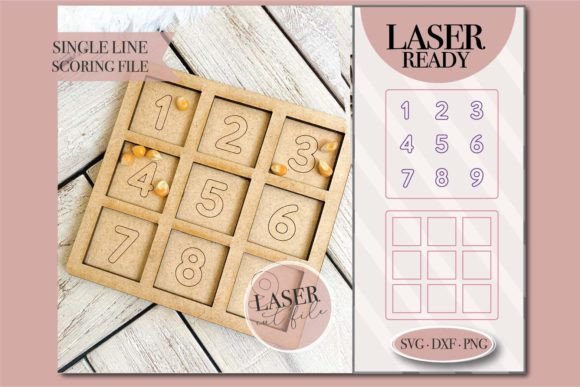
Montessori Laser Cutting Ornaments Review
As a brand designer who has spent the last decade helping local businesses find their visual voice, I approach every new graphic design asset with a critical eye. It is not enough for a file to be technically sound; it must carry emotional weight and commercial viability. Recently, I evaluated the Montessori Number Sorting Board Laser Cut File for a potential project involving a boutique educational toy store and a local artisanal bakery launching a children’s line. My goal was to determine if this digital product could transcend its primary category of Ornaments and serve as a versatile tool for small business branding, packaging, and promotional material.
First Impressions: Mood and Brand Personality
The immediate impression of the Montessori Number Sorting Board Laser Cut File is one of structured playfulness. The geometry suggests order, precision, and clarity—values that resonate deeply with modern parents and educators. For a local business owner, this mood is invaluable. It does not scream "cheap plastic"; rather, it whispers "handcrafted quality" and "thoughtful design." The aesthetic leans towards organic, friendly, and modern, making it an excellent fit for brands that want to project trustworthiness and warmth.
While the file is categorized under Laser Cutting, its utility in brand identity extends far beyond physical production. The clean lines and balanced proportions create a visual language that feels premium yet accessible. For a handmade soap business or a children’s clothing boutique, this asset suggests a brand personality that is attentive to detail and committed to quality. It avoids the clutter often found in juvenile designs, offering instead a sophisticated simplicity that appeals to adult buyers purchasing for children.
Strategic Applications in Local Business Design
In my review, I explored how this vector design could be integrated into various touchpoints of a customer journey. The versatility of the Montessori Number Sorting Board Laser Cut File allows it to function as more than just a cuttable pattern. Here is how I envision its application in real-world scenarios:
- Packaging Design: The geometric shapes can be used as die-cut windows on boxes, allowing customers to peek at the product inside. This creates interaction and excitement, enhancing the unboxing experience.
- Product Labels: Simplified elements from the file can serve as background textures for jar labels or bottle stickers, adding depth without overwhelming the text.
- Hang Tags and Thank-You Cards: Using the file for laser-cut hang tags adds a tactile, luxury feel to garments or gifts. It transforms a simple thank-you note into a keepsake.
- Social Media Graphics: The clean lines work beautifully in flat-lay photography props or as overlay elements in Instagram stories, helping to maintain a consistent visual theme across digital platforms.
- Promotional Ads and Flyers: The structure provides a natural frame for text, improving visual hierarchy in printed marketing materials.
For a food business, such as a cookie shop specializing in decorated treats, this asset could inspire the shape of the cookies themselves or the design of the packaging inserts. The key is to view the file not just as a final product, but as a foundational element of professional branding.
Enhancing Business Presentation and Customer Trust
Why does this matter for a handmade business? Because perception is reality. A cohesive brand identity builds customer trust. When a consumer sees consistent use of high-quality design elements across your product label, website, and social media, they perceive the business as established and reliable. The Montessori Number Sorting Board Laser Cut File supports this by providing a polished, professional look that elevates perceived value.
Stronger first impressions lead to better product recognition. By using this asset as a recurring motif in your marketing visuals, you create a signature style. Whether it is used in editorial design for a lookbook or as a decorative border on a menu, it reinforces brand recall. Furthermore, the precision of the vector lines ensures that whether you are printing small stickers or large banners, the image remains crisp, contributing to a more professional packaging appearance.
Where to Use It and Where to Exercise Caution
Not every design asset fits every context. In my evaluation, I identified specific areas where the Montessori Number Sorting Board Laser Cut File shines and others where it should be used sparingly.
Best Use Cases:
- Hero Graphics: Use the full design as a central visual element on landing pages or main product images.
- Seasonal Packaging: Ideal for back-to-school campaigns or holiday gift sets where themes of learning and giving intersect.
- Boutique Visuals: Perfect for store signage or window displays that aim to attract families.
- Product Mockups: Enhances digital presentations by adding realistic texture and depth.
Use with Caution:
- Formal Corporate Branding: The playful nature may clash with serious B2B industries.
- Very Small Labels: Intricate details may get lost or muddy when scaled down significantly for tiny ingredient lists.
- Crowded Packaging: Avoid placing it over busy patterns or dense text, as it competes for attention.
- Legal Information Areas: Never let decorative elements obscure mandatory regulatory text.
- Luxury Minimalist Brands: If your brand relies on extreme negative space, this detailed pattern might feel too busy.
Practical Notes for the Brand Designer
Before integrating this SVG design or PNG design into a client project, I recommend several practical tests. First, always test the asset on real product mockup templates. Seeing it in context reveals issues with scale and contrast that are invisible on a white canvas. Check its performance in black and white to ensure it retains its integrity without color reliance.
Typography pairing is crucial. I found that the geometric nature of the file pairs well with clean sans serif fonts for a modern look, or handwritten fonts for a softer, more approachable vibe. Avoid overly decorative script fonts that might clash with the structured lines of the laser cut pattern. Additionally, verify the commercial license terms. While many assets from creative marketplaces allow for physical product sales, confirming this prevents legal issues down the line.
Finally, consider the material. If you are using this for Laser Cutting on wood or acrylic, test different thicknesses to see how the kerf (the width of the cut) affects the fit of any interlocking parts. For digital use, ensure the PNG transparency is clean and the SVG nodes are optimized for smooth editing in software like Illustrator or Canva.
In conclusion, the Montessori Number Sorting Board Laser Cut File is a robust resource for designers looking to add a touch of structured whimsy to their projects. When used thoughtfully, it enhances local business branding, creates engaging social media graphics, and elevates the tactile experience of physical products. It is not just a file; it is a building block for a memorable brand experience.