Reviewing Feeling Cute Might Throw a Tantrum Later
As an embroidery designer who has spent countless hours digitizing, stitching, and troubleshooting designs for clients, I have learned that the difference between a bestseller and a dusty inventory item often comes down to personality. We are not just selling thread on fabric; we are selling mood, humor, and relatability. Recently, I took a close look at Feeling Cute Might Throw a Tantrum Later, a digital graphic asset that promises to bring a playful, sassy edge to custom apparel. While this product is listed under T-Shirt Designs and Graphics, my focus was strictly on how it translates from a screen to a needle-punched reality.
First Impressions: Mood and Visual Personality
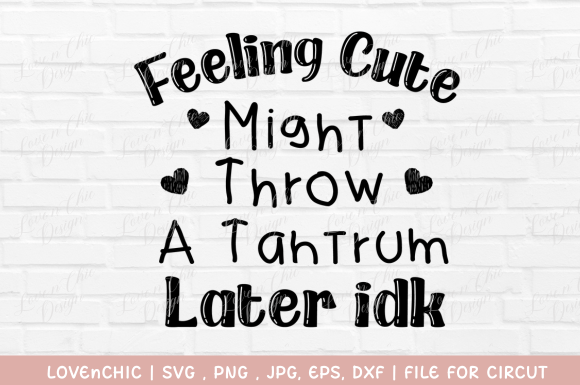
The first thing that strikes you about Feeling Cute Might Throw a Tantrum Later is its balanced tone. It walks the fine line between adorable and rebellious, a combination that resonates deeply with modern consumers. The layout suggests a design that relies heavily on typography paired with a central visual element, likely a character or icon that embodies the "cute" aspect before the punchline hits. For an embroidery project, this contrast is vital. If the design were too aggressive, it would lose its charm; if it were too sweet, it would lack the humorous hook that drives impulse buys on platforms like Etsy.
From a designer’s perspective, the workspace dimensions of 1000 x 1000 pixels at 300 DPI indicate a high-resolution source file. This is crucial for clarity. When we scale these graphics down for a left-chest logo or up for a full-back print, pixelation is the enemy. Having access to SVG, PNG, JPG, EPS, and DXF files means we have flexibility. The SVG and EPS files are particularly valuable for those of us who use vector-based software to clean up lines or adjust proportions before converting them into a machine embroidery design.
Real-World Application: The Sweatshirt Test
To truly evaluate Feeling Cute Might Throw a Tantrum Later, I imagined applying it to a real-life scenario: a custom order for a boutique client looking for unique sweatshirt embroidery. Sweatshirts are forgiving canvases, but they present challenges regarding fabric texture and stretch. The playful nature of this design makes it an ideal candidate for casual wear. I envisioned placing the graphic on the upper back of a oversized crewneck, a trend that continues to dominate small shop products.
In this context, the design’s readability is paramount. Since the phrase is longer than a single word, the font choice within the graphic must be bold enough to remain legible when stitched. If the original graphic uses thin, script-heavy fonts, I would advise caution. In embroidery, thin lines can get lost in the pile of fleece or terry cloth. However, if the design features blocky, rounded lettering, it will hold up beautifully. The "tantrum" theme suggests a certain chaotic energy, which pairs well with slightly irregular or hand-drawn style fonts that mimic the imperfection of handmade products.
Navigating Fabric and Stitching Challenges
When moving from a digital embroidery file to a finished product, we must consider where Feeling Cute Might Throw a Tantrum Later might struggle. One critical area is stitch density. If the graphic contains large solid areas of color, converting it directly to a fill stitch without proper underlay can result in a stiff, heavy patch that pulls on the fabric. For a tote bag design or a sturdy canvas apron, this is less of an issue. But for baby embroidery on a onesie or a lightweight t-shirt, excessive density can cause puckering.
I recommend analyzing the black and white version of the PNG file to gauge contrast and complexity. If the design has intricate details or tiny lettering, it may not survive the transition to thread. Embroidery machines cannot replicate the infinite resolution of a printer. Small serifs or tight curves in the text might need to be simplified. If you are planning to use this as an applique design, the process becomes easier. You can use the graphic as a template for cutting fabric shapes, then use a satin stitch or running stitch to secure the edges. This reduces bulk and allows for more vibrant color combinations without overwhelming the garment.
Another consideration is the hoop size. Ensure that the scaled design fits comfortably within your standard hoops, whether you are using a 4x4 inch hoop for patches or a 5x7 inch hoop for larger statements. Always test the design on scrap fabric first. This step is non-negotiable for professional embroidery projects. Check how the thread colors interact with the fabric texture. A dark navy sweatshirt will require different thread choices than a heather gray tee to ensure the message pops.
Commercial Viability for Etsy Sellers and Crafters
For the Etsy seller or creative entrepreneur, Feeling Cute Might Throw a Tantrum Later offers strong commercial potential. The humor is universal, appealing to parents, teachers, and anyone who appreciates a bit of self-deprecating wit. This broad appeal increases the likelihood of buyer engagement. When creating printable mockups or digital product previews, the high-resolution JPG and PNG files allow for crisp, professional-looking images that build customer trust.
However, licensing is a key factor. Before listing finished items or selling the digital assets themselves, confirm the license terms provided with the zip file. Most commercial embroidery projects require a clear understanding of whether the design can be used for mass production or limited handmade runs. Assuming the license permits commercial use, this design fits seamlessly into categories like holiday embroidery gifts, personalized gift items, and boutique branding. It is the kind of design that encourages social sharing, which is invaluable for small business marketing.
Practical Designer Notes for Best Results
To get the most out of Feeling Cute Might Throw a Tantrum Later, keep these practical tips in mind:
- Check Thread Contrast: Ensure your thread colors stand out against the fabric. High contrast improves readability, especially for humorous text.
- Stabilizer Selection: Use a cut-away stabilizer for stretchy fabrics like t-shirts and sweatshirts to prevent distortion after washing.
- Test Stitch Density: If digitizing from the graphic, reduce fill density to keep the finished product soft and flexible.
- Inspect Small Details: Zoom in on the SVG or EPS file to identify any nodes or lines that might be too fine for embroidery.
- Mockup Verification: Create mockups on both light and dark backgrounds to visualize versatility for your online store.
In conclusion, Feeling Cute Might Throw a Tantrum Later is a versatile graphic asset that, with careful preparation, can elevate a range of embroidery projects. Whether you are creating a custom apparel line, designing embroidered patches, or making personalized gifts, the key lies in respecting the limitations of the medium while leveraging the strength of the design’s personality. By paying attention to stitch density, fabric choice, and legibility, you can transform this digital clipart into a high-quality, tangible product that customers will love.