Reviewing A Truly Amazing Teacher is Hard to
As a designer who spends more time staring at stitch simulations than I do sleeping, I have learned that not every digital file translates well to thread. We live in an era where design assets are plentiful, but finding a graphic that holds up under the needle requires a critical eye. Recently, I pulled up the file titled A Truly Amazing Teacher is Hard to to evaluate its potential for real-world application. This isn’t just about whether the lines look clean on a screen; it is about how this machine embroidery design will behave when subjected to the tension of a hoop and the texture of fabric.
First Impressions and Visual Personality
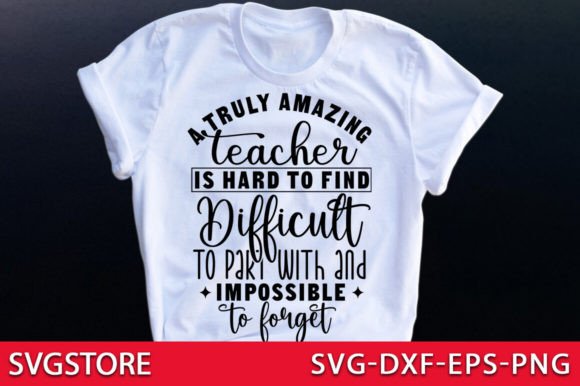
The phrase itself carries a weight of appreciation, making it an ideal candidate for end-of-year gifts or retirement presents. Visually, the layout suggests a balance between readability and decorative flair. When reviewing Graphics in the Crafts category, I look for clear separation between elements. Ambiguous lines often lead to thread breaks or messy jump stitches. The mood here is warm and professional, avoiding the overly childish tropes sometimes associated with educator-themed designs. It feels sophisticated enough for a high-quality personalized gift yet accessible for a hobbyist looking to make something special.
The versatility of the provided formats—SVG, DXF, EPS, and PNG—means this asset is not limited to embroidery alone. However, my focus remains on how it performs as an embroidery file. The typography appears sturdy, which is crucial. Delicate serifs often disappear into the fabric pile, but this design seems to prioritize legibility, a key factor for any finished product meant to be read from a distance.
Real-World Application: The Tote Bag Test
To truly understand the value of this design, I imagined applying it to a canvas tote bag design project. Canvas is unforgiving; it shows every imperfection in digitizing. If the stitch density is too low, the fabric shows through. If it is too high, the bag puckers. For a teacher’s gift, a tote is practical. They carry books, papers, and supplies. A design like A Truly Amazing Teacher is Hard to needs to withstand frequent washing and heavy loads.
In this scenario, I would recommend using a heavy cut-away stabilizer. The text length suggests a medium to large hoop size is necessary to maintain proportion. Cramming this phrase into a 4x4 inch hoop would render the text illegible. Instead, a 5x7 or 6x10 hoop allows the letters to breathe. This spacing ensures that each character, whether rendered in a satin stitch or a tight fill stitch, remains distinct. For a small business owner or Etsy seller, this distinction is vital. Customers pay for clarity and professionalism, not just the sentiment.
Fabric Considerations and Stitch Behavior
Not all fabrics react the same way to embroidery. When working with custom apparel like sweatshirts, the pile of the fleece can swallow thin lines. If this design relies heavily on fine details, it might get lost on a fluffy hoodie. In such cases, I advise testing a running stitch outline first to define the edges before filling. Conversely, on smooth cotton poplin for a shirt, the same design will appear crisp and sharp.
For those considering this for baby embroidery items, caution is required. Babies have sensitive skin, and dense stitching can feel scratchy on the reverse side. If you use this on a onesie or bib, ensure you use a soft backing and perhaps reduce the density if your software allows. The goal is a handmade product that feels as good as it looks. Similarly, for embroidered patch creation, the design must be scaled correctly. Patches often require higher density to prevent fraying edges, so checking the border integrity of the text is essential.
Navigating Technical Challenges
There are specific scenarios where A Truly Amazing Teacher is Hard to requires careful handling. Curved surfaces, such as caps, present a unique challenge. The distortion caused by the curve can stretch the text, making it look warped. If you are creating sweatshirt embroidery or cap designs, always hooping the garment properly and using a stabilizer suited for stretchy or textured materials. Dark fabrics pose another issue. If the design is intended for black or navy garments, you must ensure high contrast in your thread colors. A dark thread on dark fabric will vanish. Always run a test stitch-out on scrap fabric of the same type and color before committing to the final piece.
Additionally, consider the holiday embroidery market. While this design is timeless, pairing it with seasonal motifs could boost sales for small shop products. However, avoid cluttering the design. The strength of the message lies in its simplicity. Adding too many decorative elements can distract from the core message and increase stitch count unnecessarily, leading to longer production times and higher thread costs.
Commercial Viability and Brand Consistency
For commercial embroidery professionals, consistency is key. Using a reliable digital embroidery file ensures that every item produced meets the same standard. This design, with its clear structure, supports brand consistency for shops specializing in educational gifts. It projects professionalism. When customers see clean, well-executed stitching, their trust in your craft increases. This directly impacts buyer engagement and repeat business.
Moreover, the inclusion of SVG and PNG files allows for versatile marketing. You can create printable mockup images for your online store without needing to stitch every single variation. This saves time and resources, allowing you to showcase the design on various products like aprons, pillow covers, or tea towels digitally before producing physical stock. It is a smart workflow for any craft business aiming to scale.
Practical Designer Notes for Success
Before you load this design into your machine, take a moment to review the technical specifics. Since the product description lists SVG, DXF, EPS, and PNG, verify if the actual embroidery file (such as PES, DST, or JEF) is included or if conversion is needed. If conversion is required, ensure your software handles the font outlines correctly to avoid shifting letters.
- Test on Scrap: Always stitch a sample on the actual fabric you intend to use. Check for puckering or thread breaks.
- Check Contrast: Ensure your thread choice stands out against the fabric background. High contrast improves readability.
- Stabilizer Selection: Use cut-away stabilizer for stretchy fabrics and tear-away for stable woven fabrics.
- Hoop Size: Confirm the design fits comfortably within your hoop with adequate margin for clamping.
- Licensing: Review the license terms carefully. Confirm whether the file allows for commercial use if you plan to sell finished items.
In conclusion, A Truly Amazing Teacher is Hard to offers a solid foundation for meaningful embroidery projects. Its strength lies in its clarity and emotional resonance. By paying attention to fabric choice, stabilizer, and stitch quality, you can transform this digital asset into a cherished keepsake. Whether you are an experienced decorator or a novice maker, treating the design with respect for its technical requirements will yield a superior result. Remember, the best designs are those that not only look good on screen but survive the rigors of real life, wash after wash.